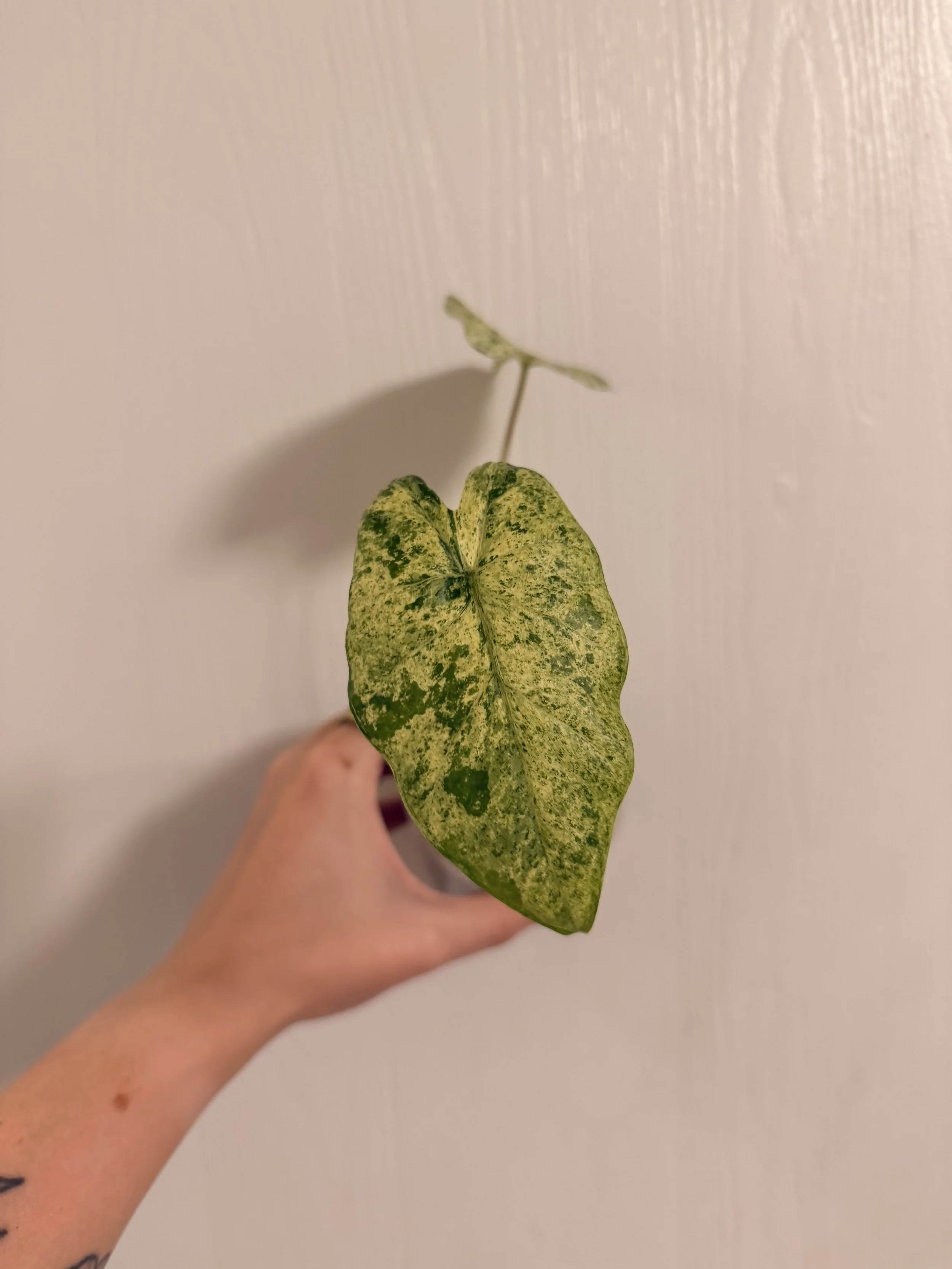
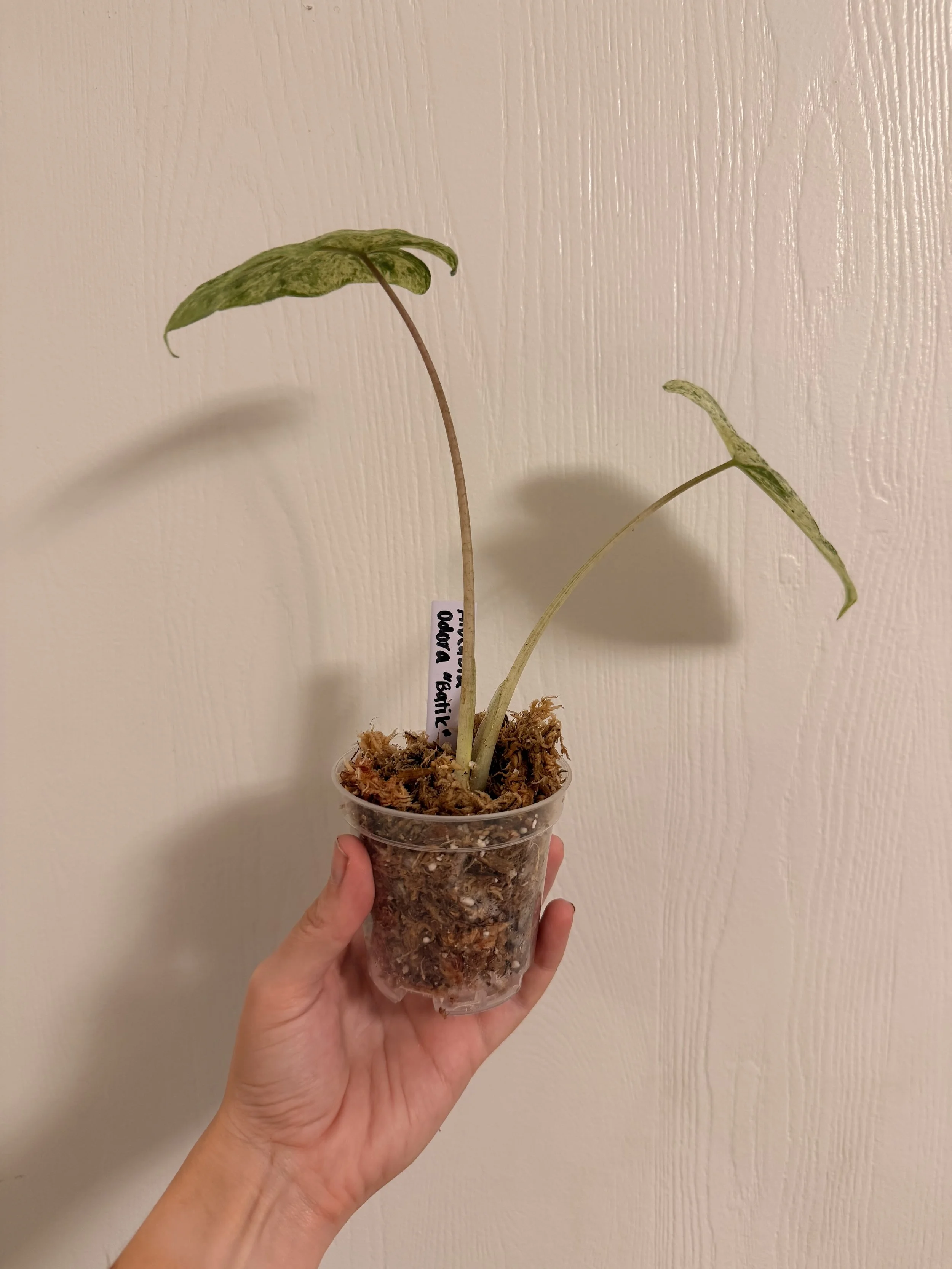
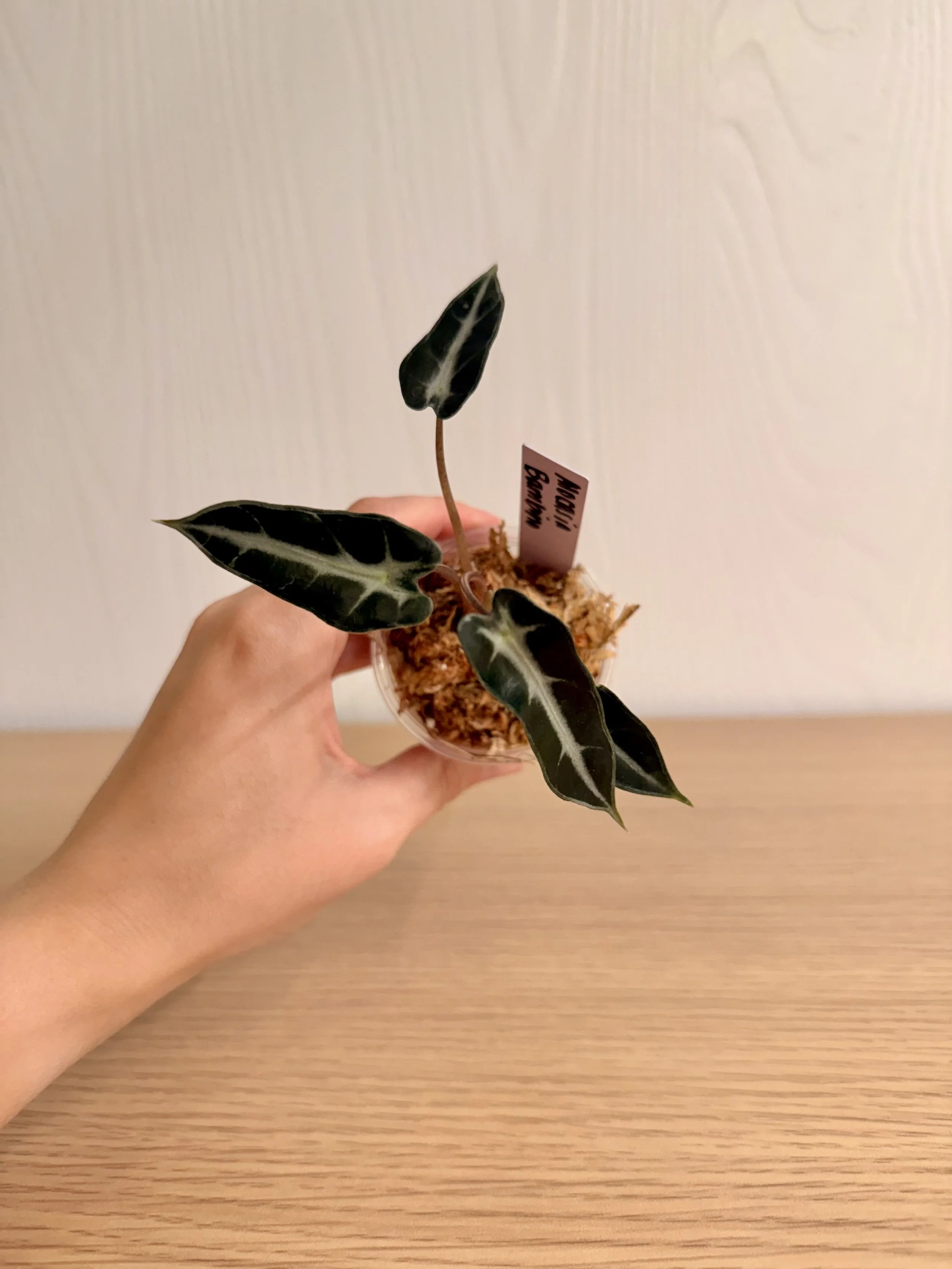
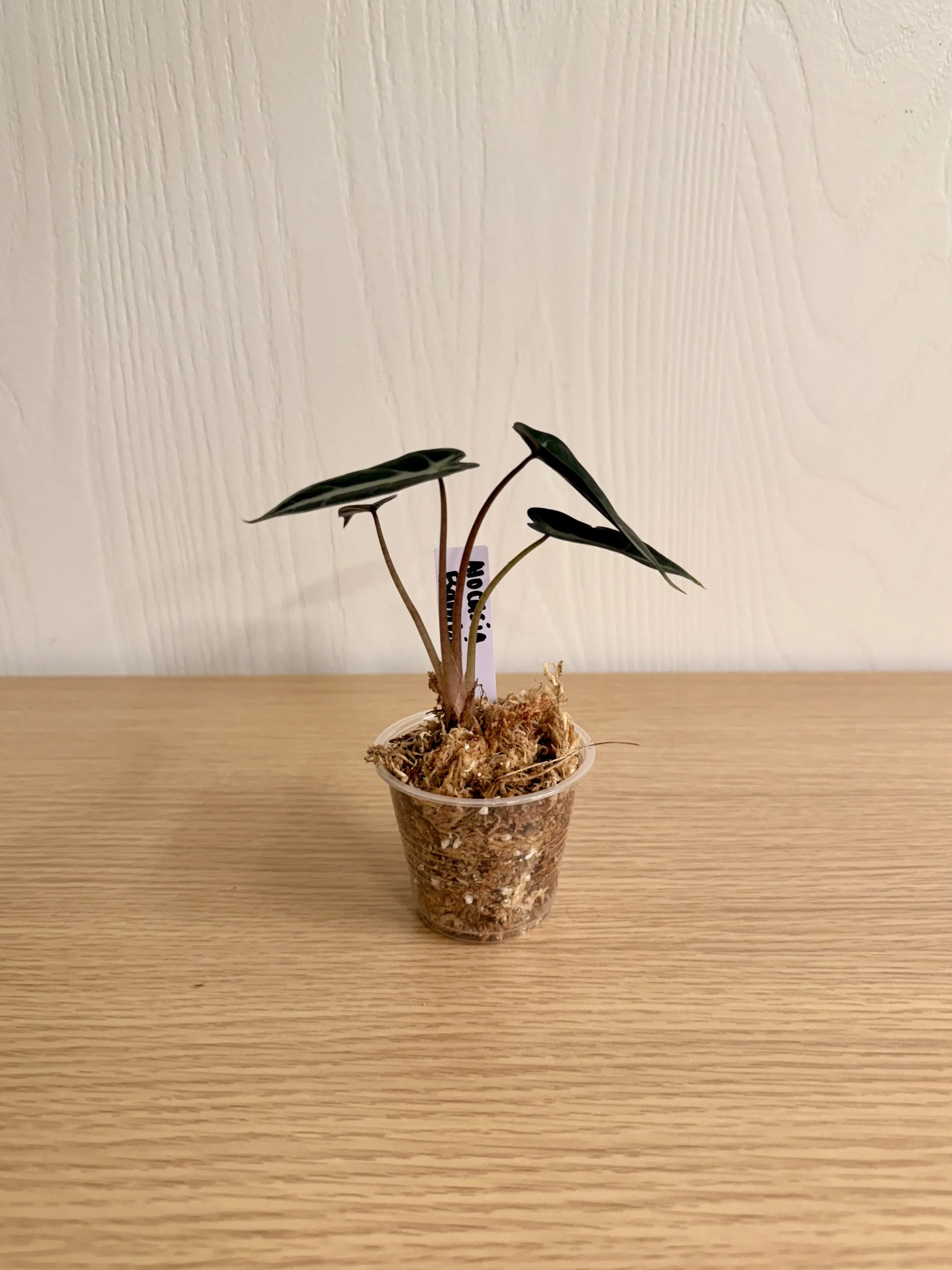
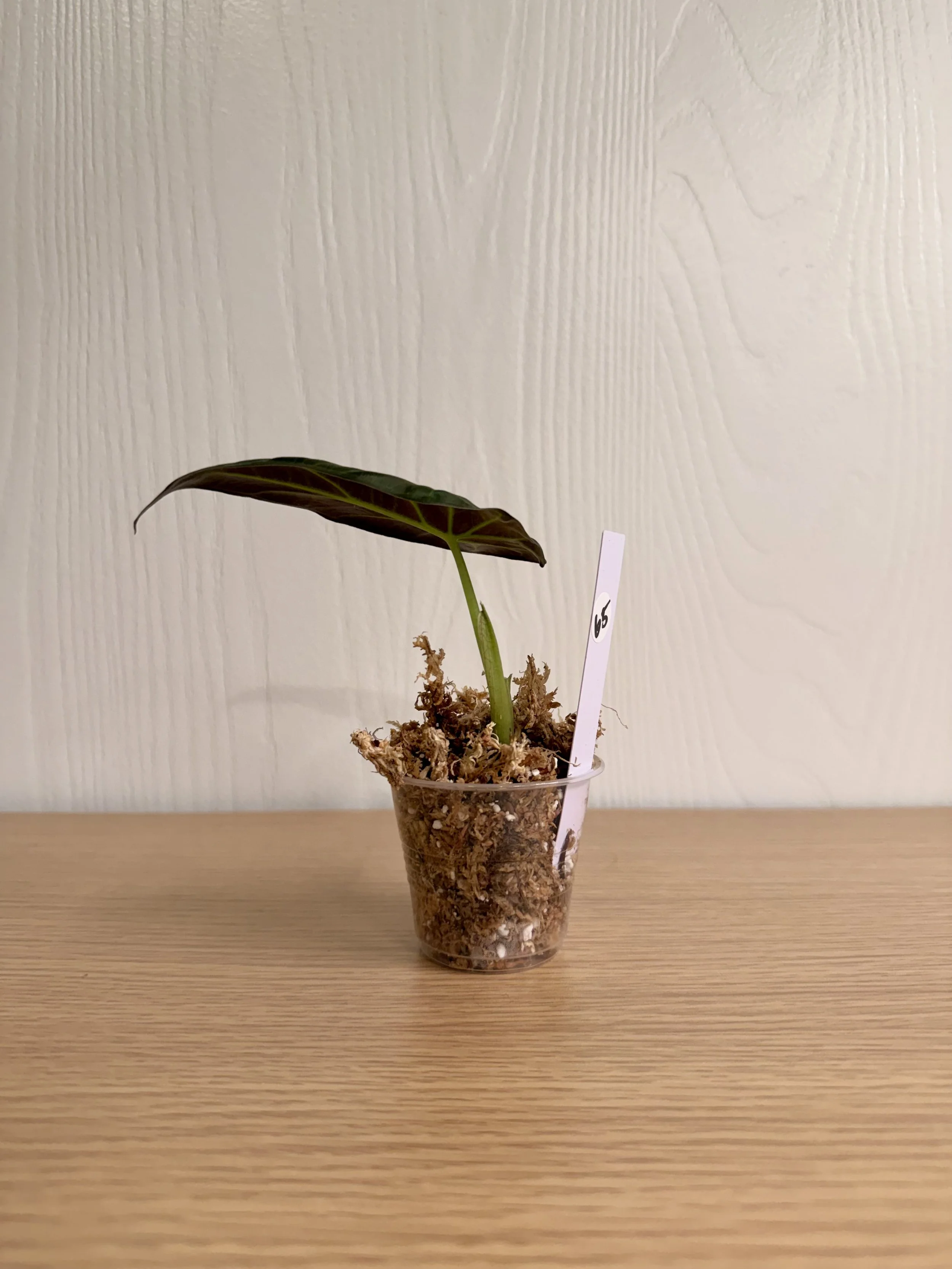
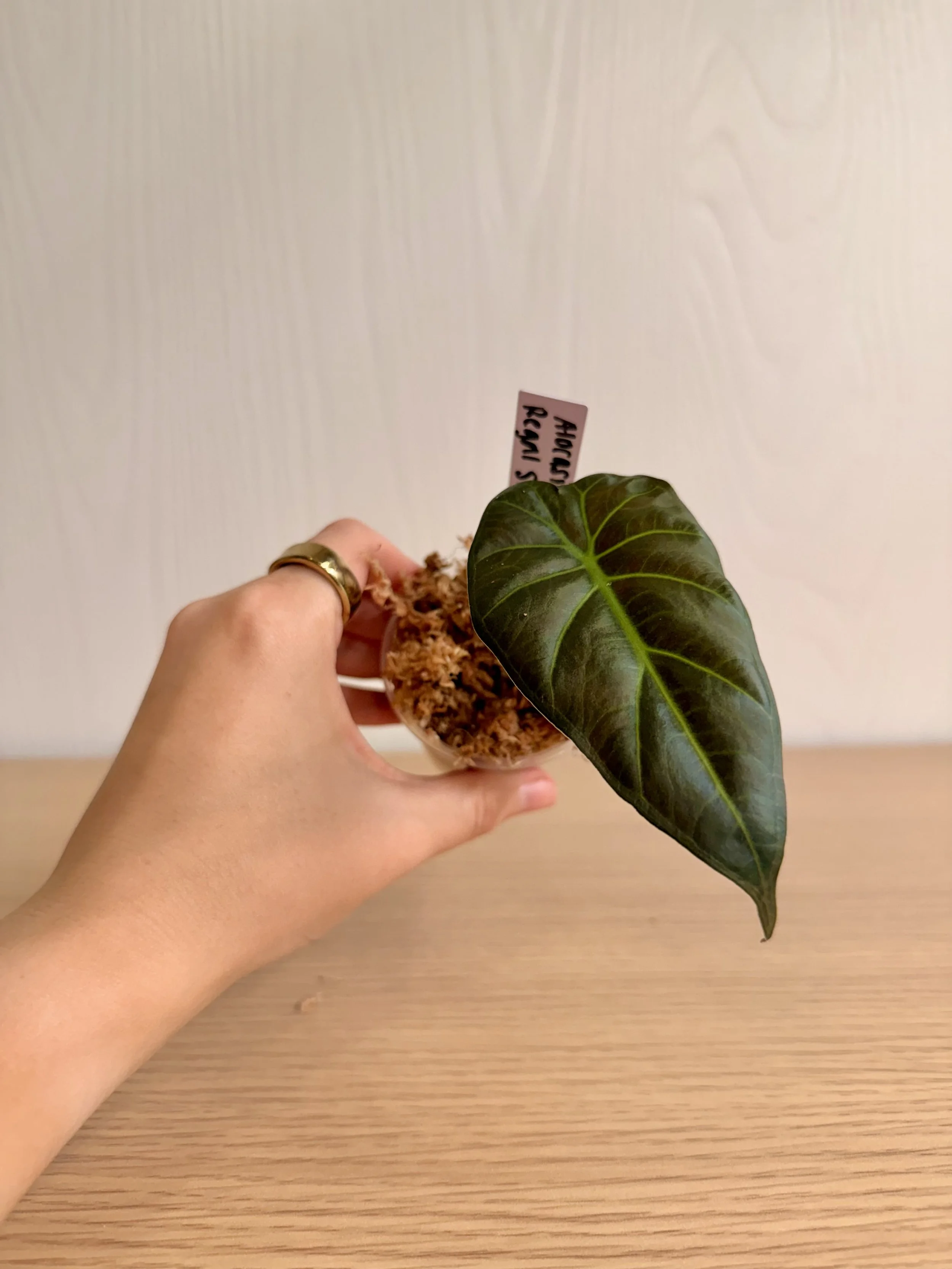
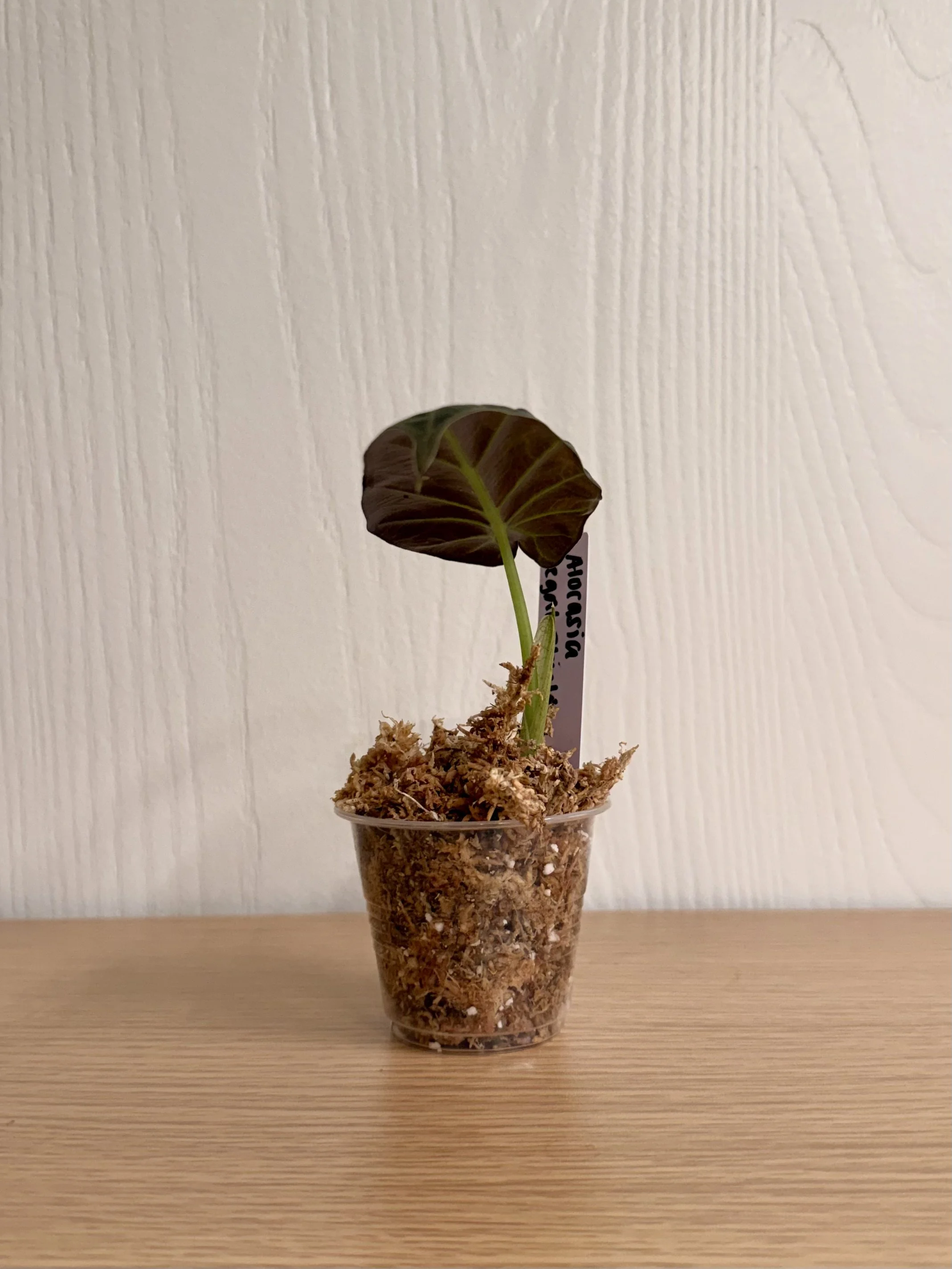
 Image 1 of 3
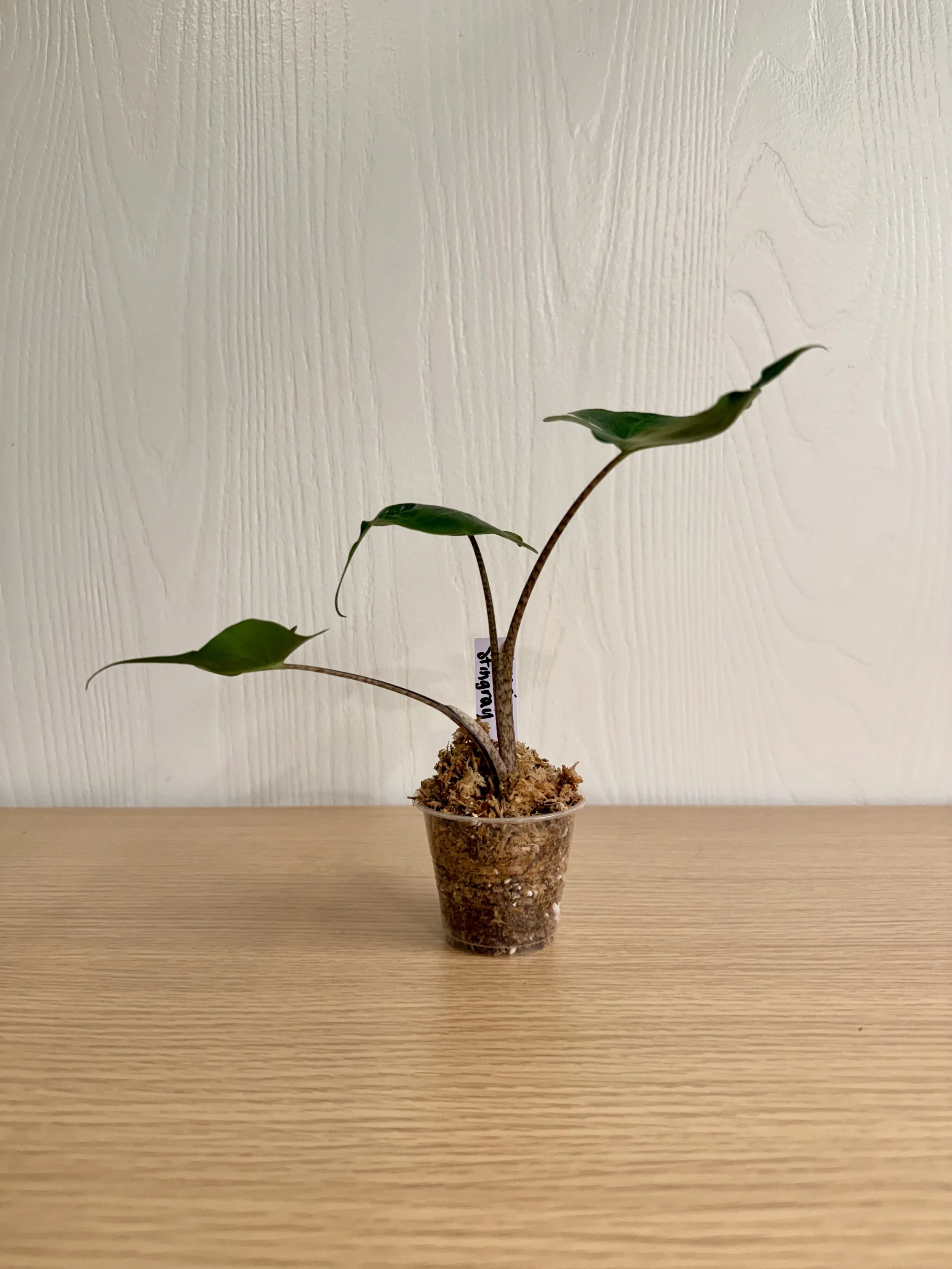 Image 2 of 3
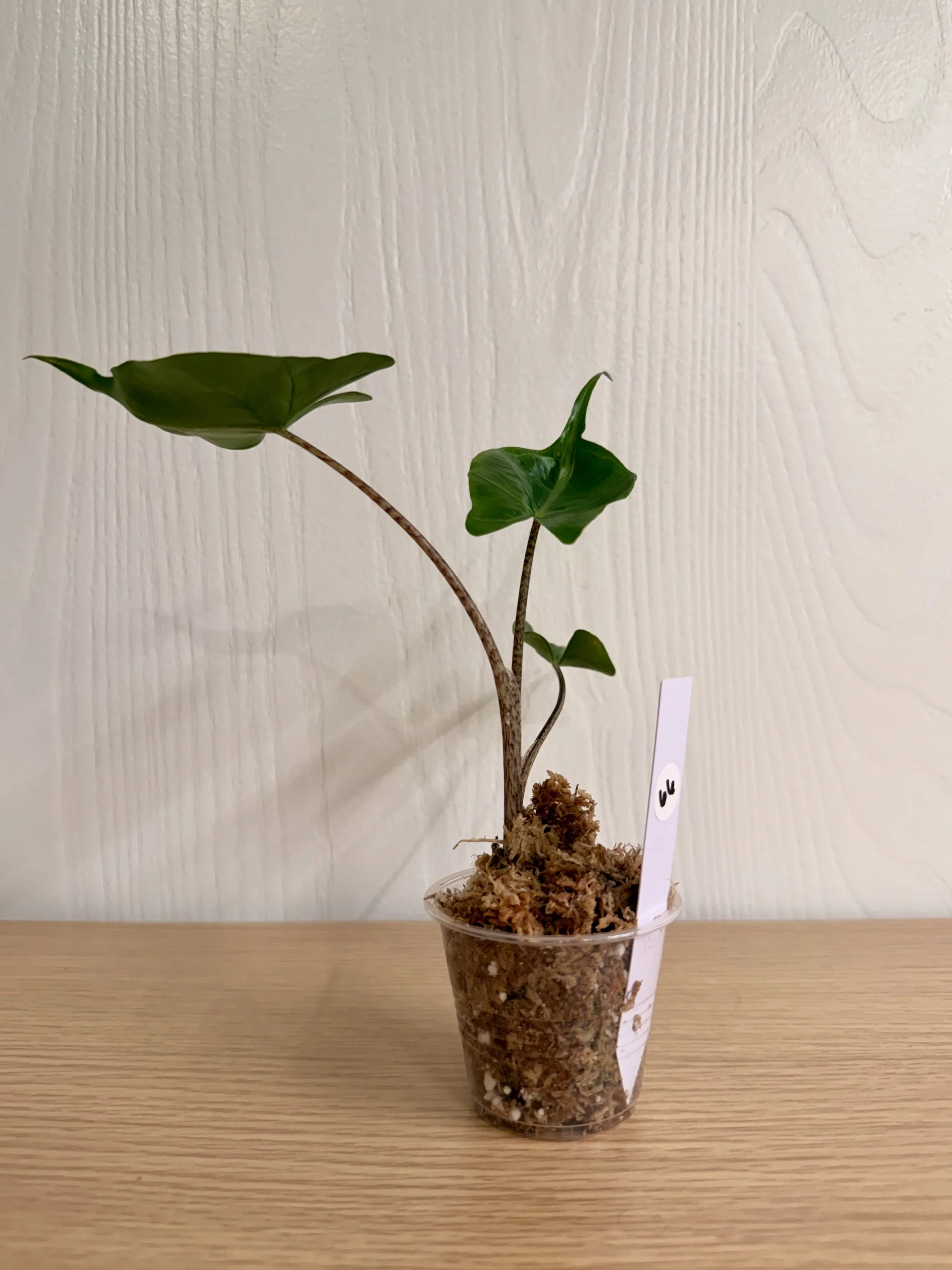 Image 3 of 3
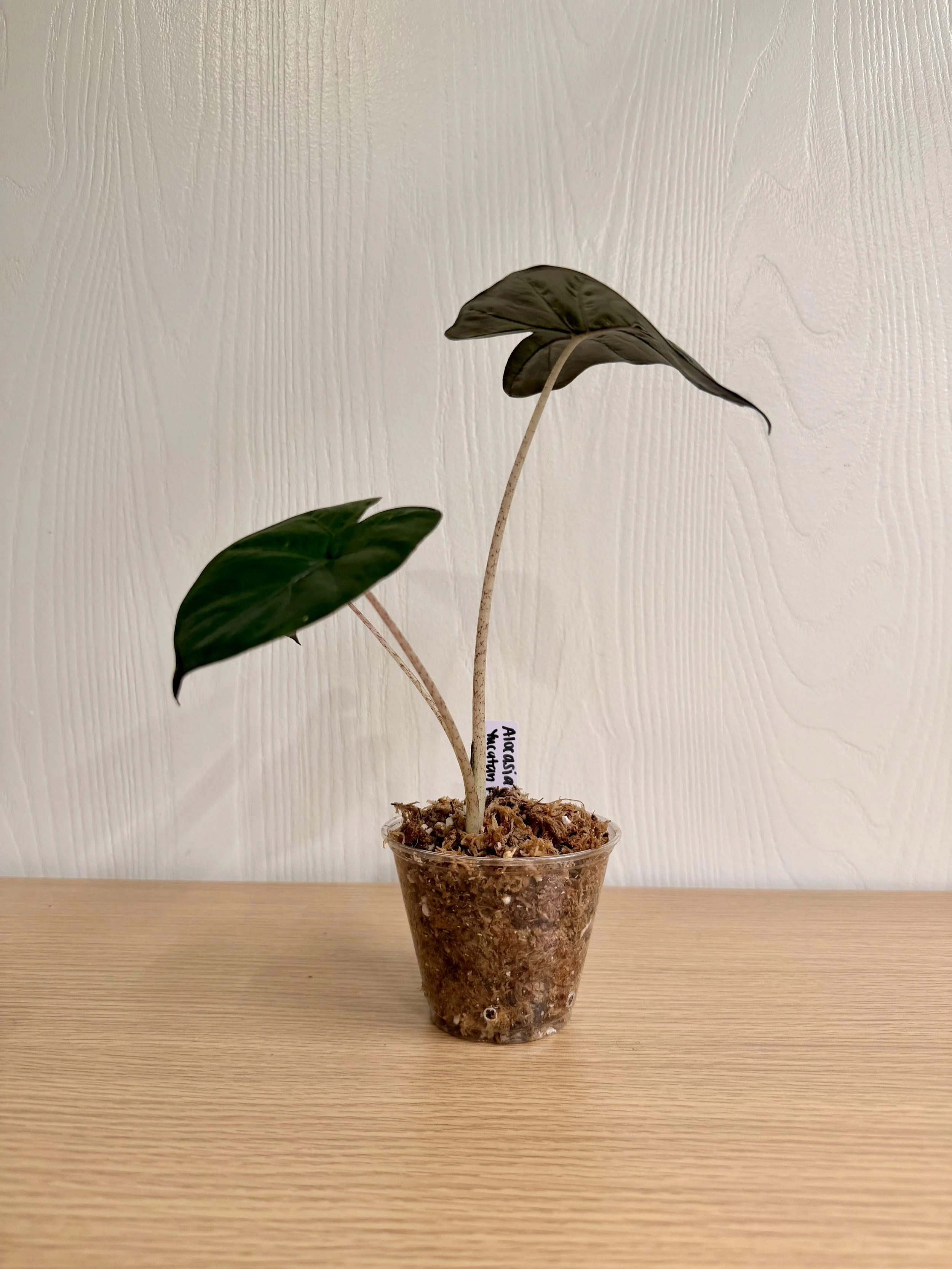
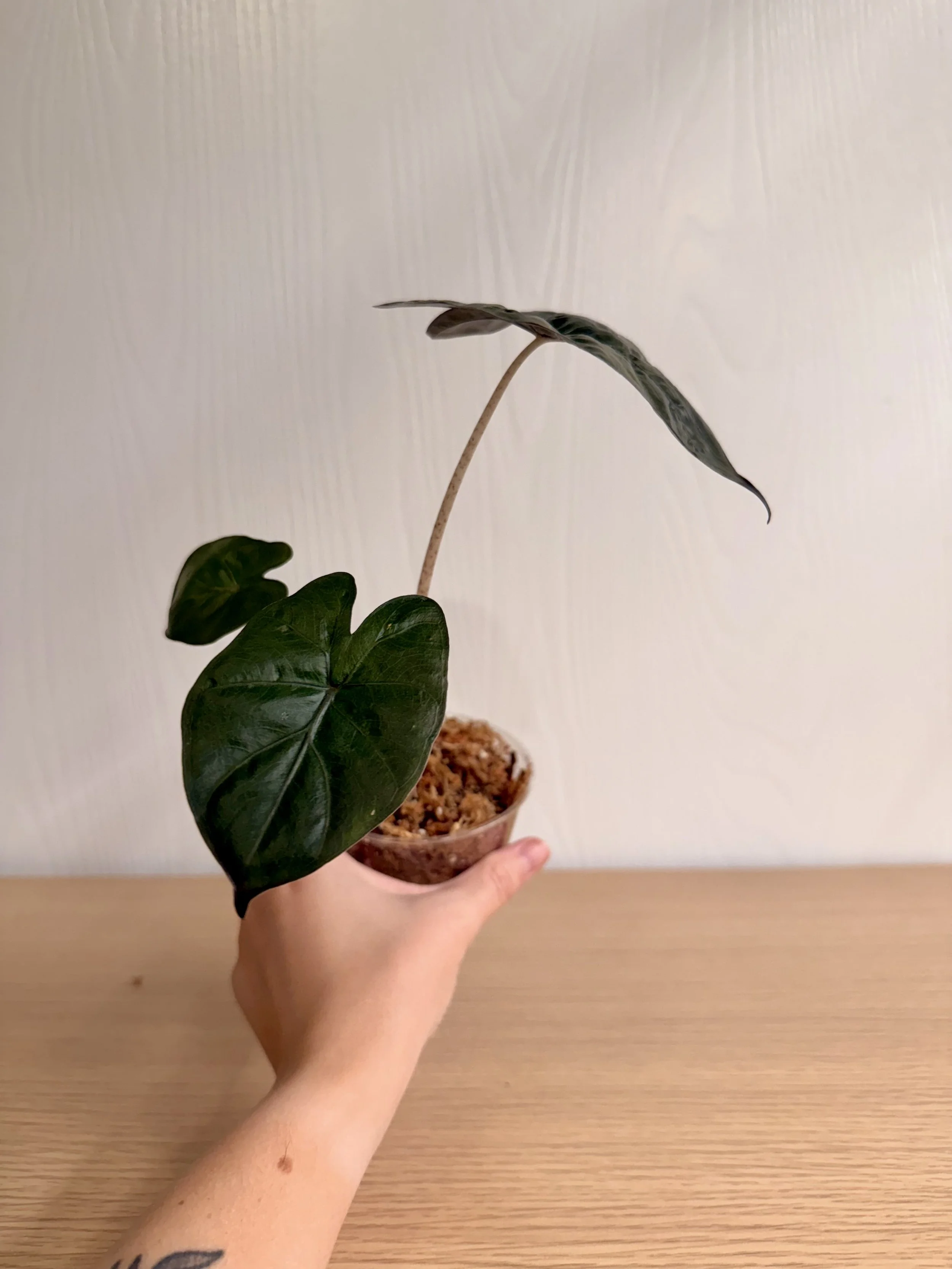
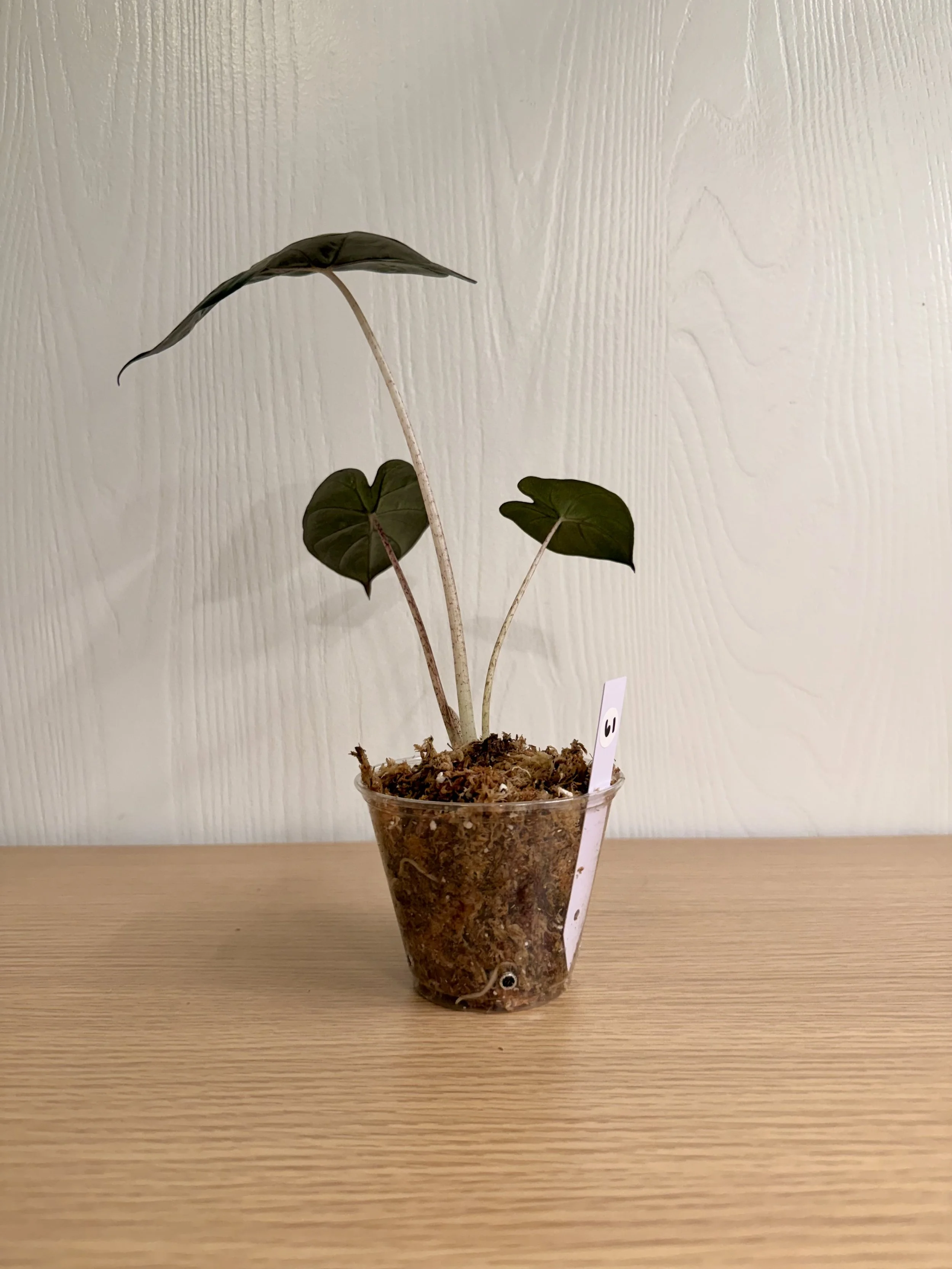
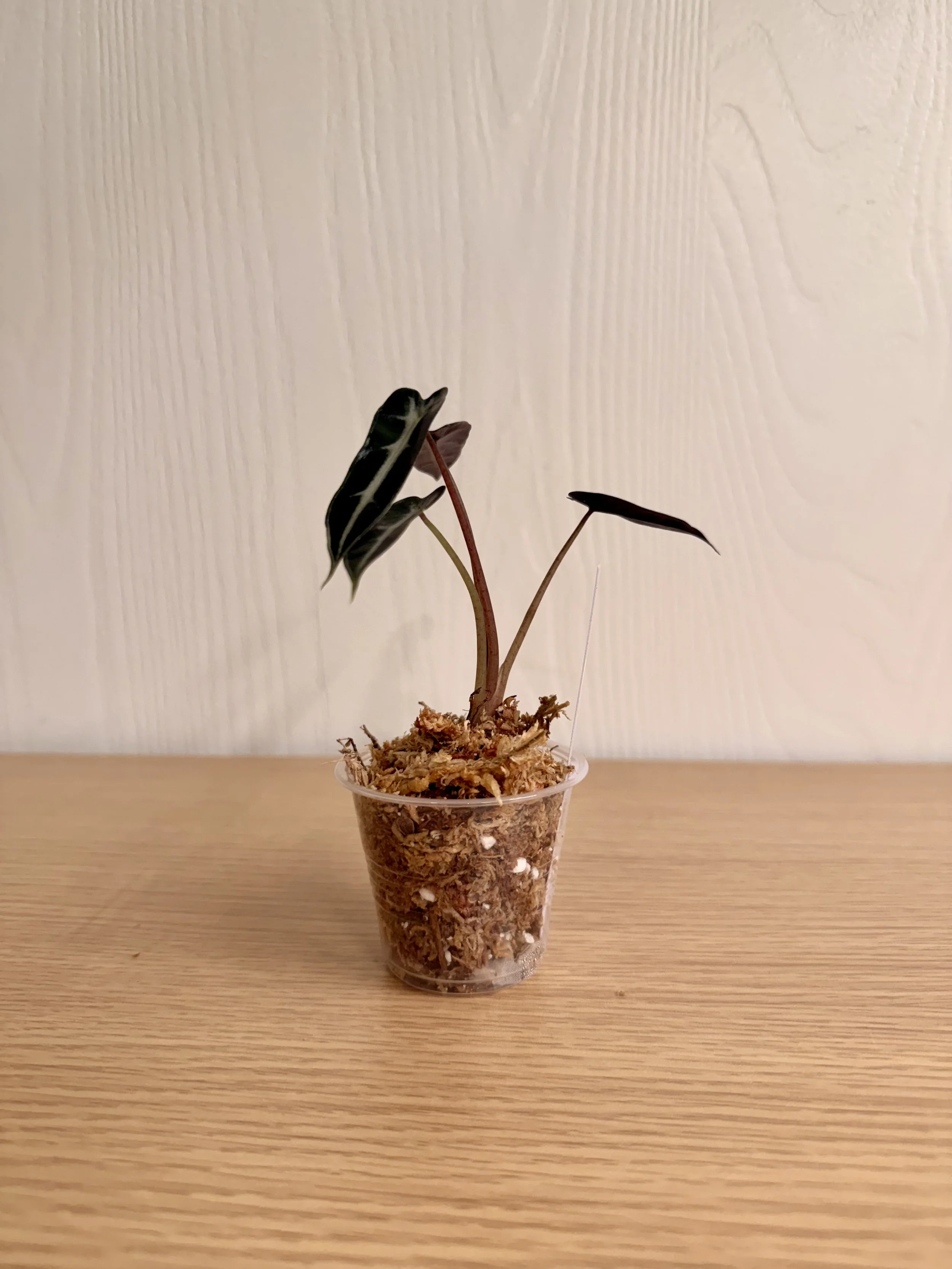
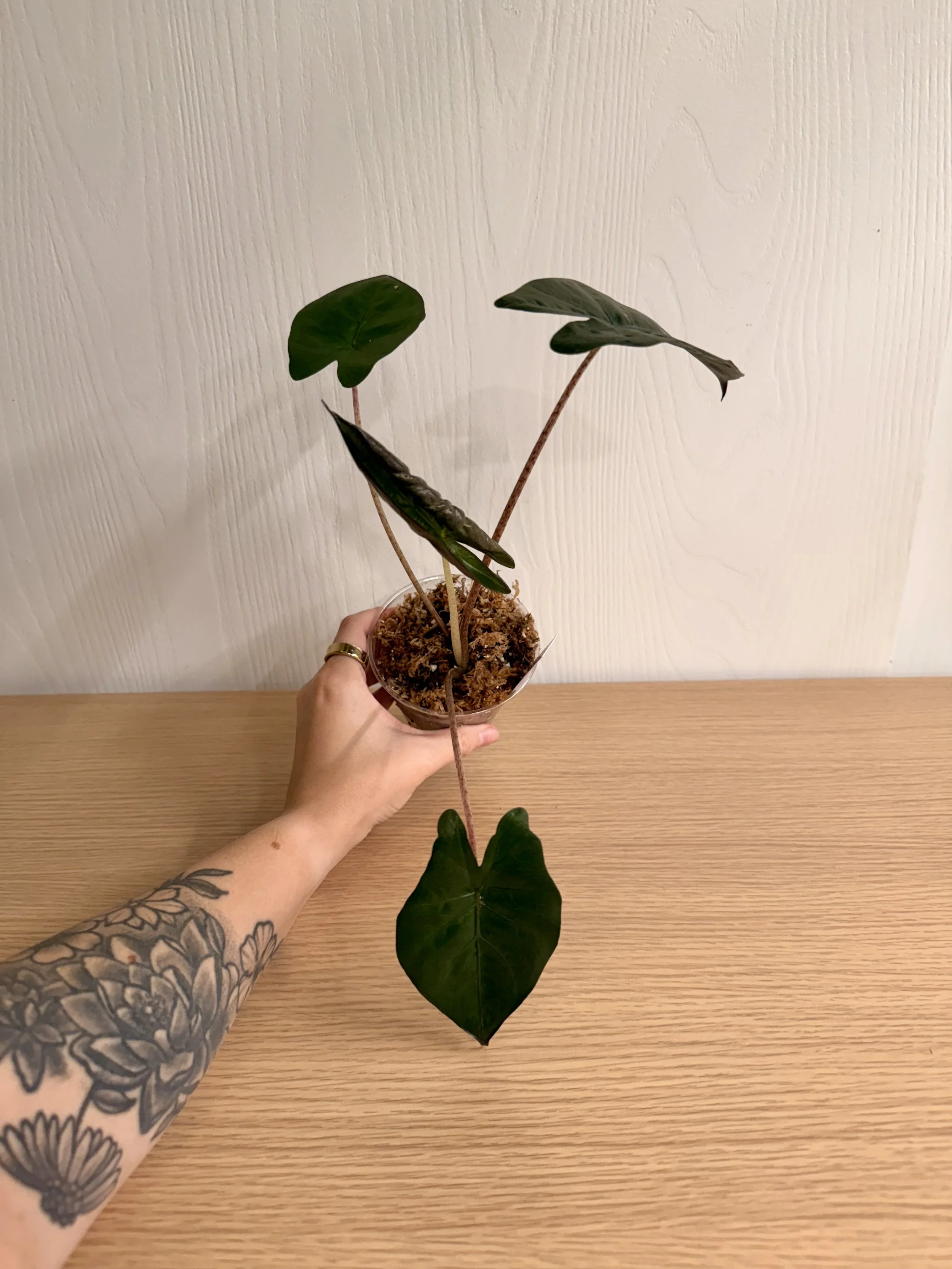
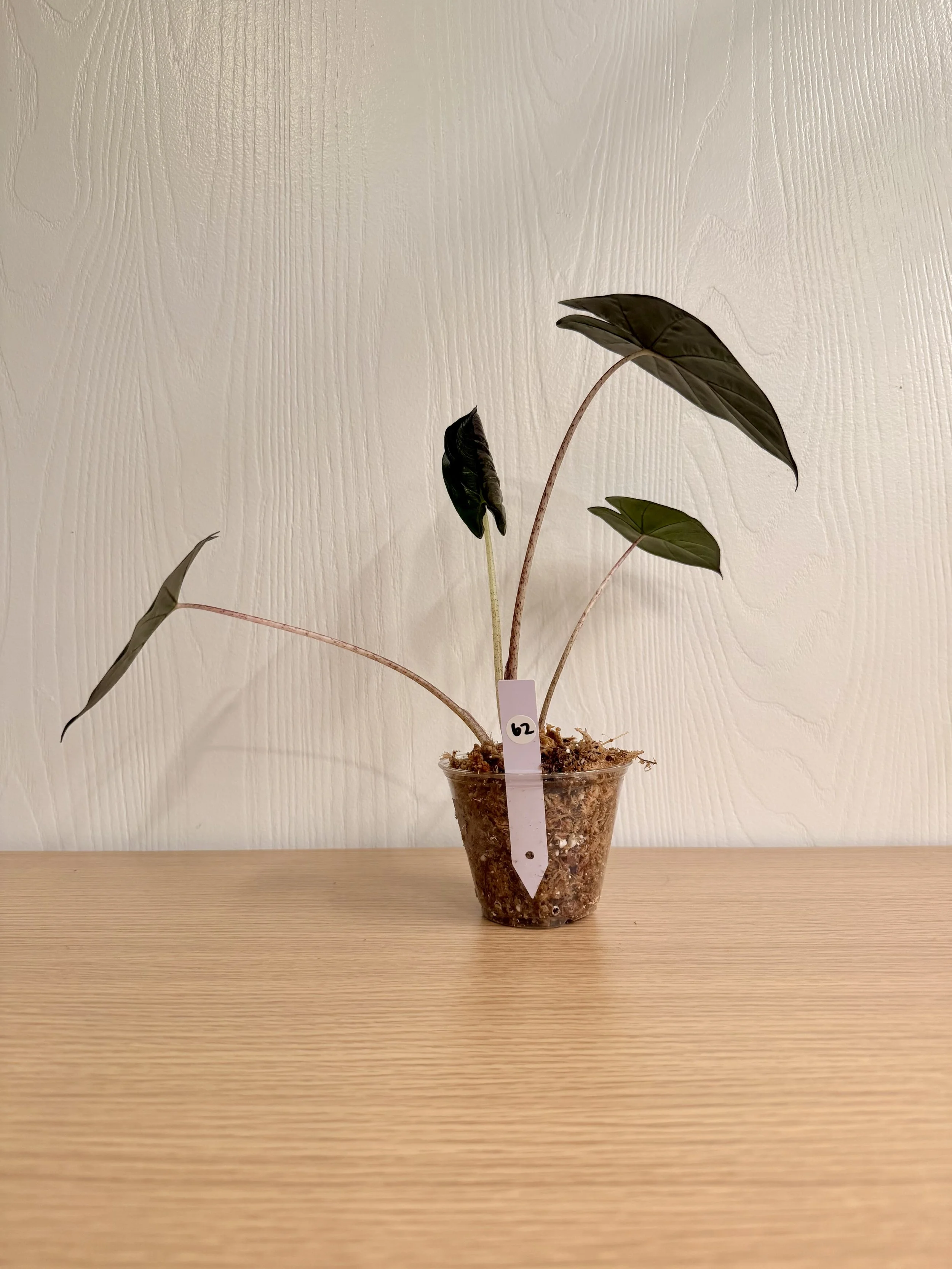
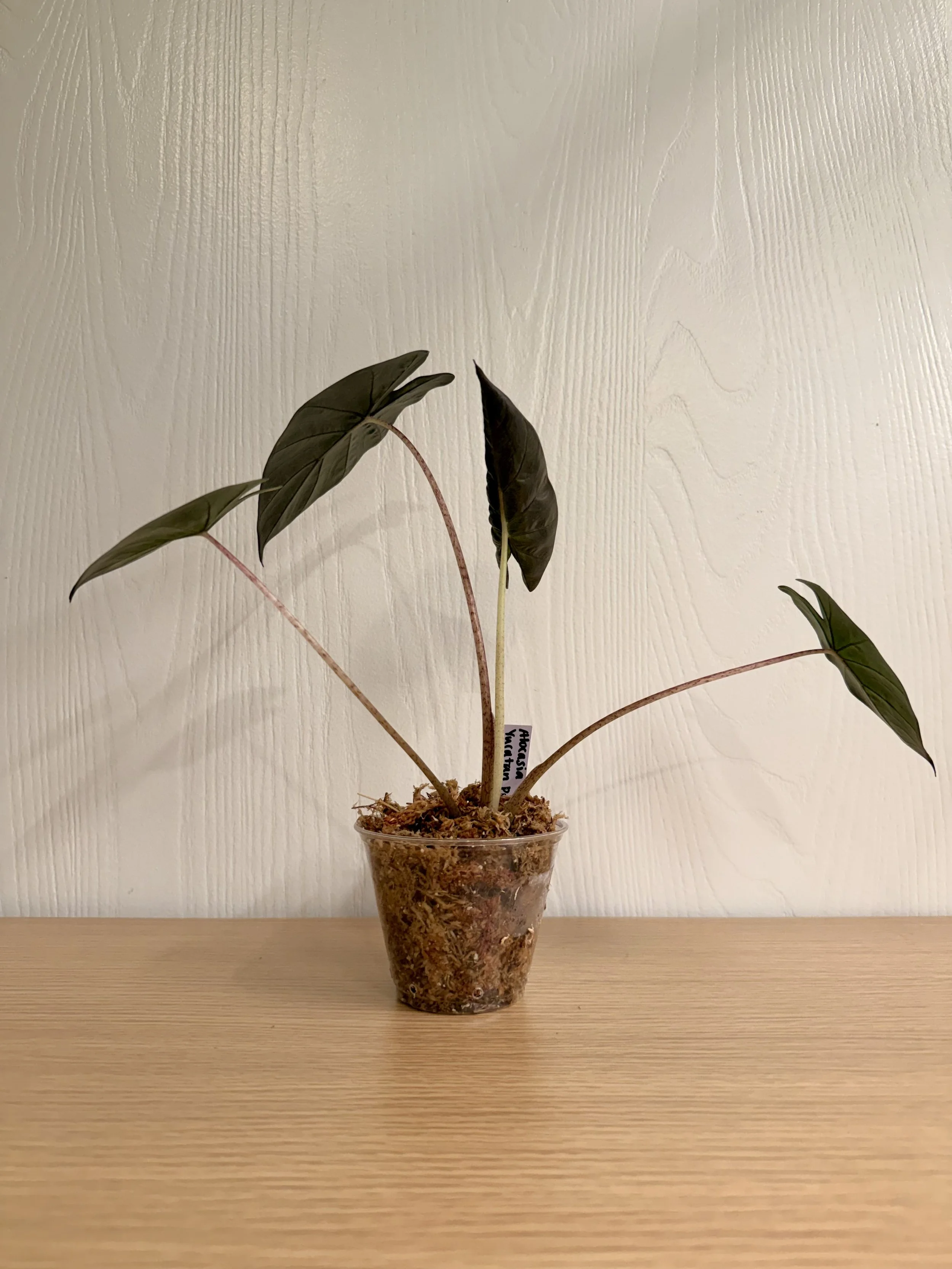
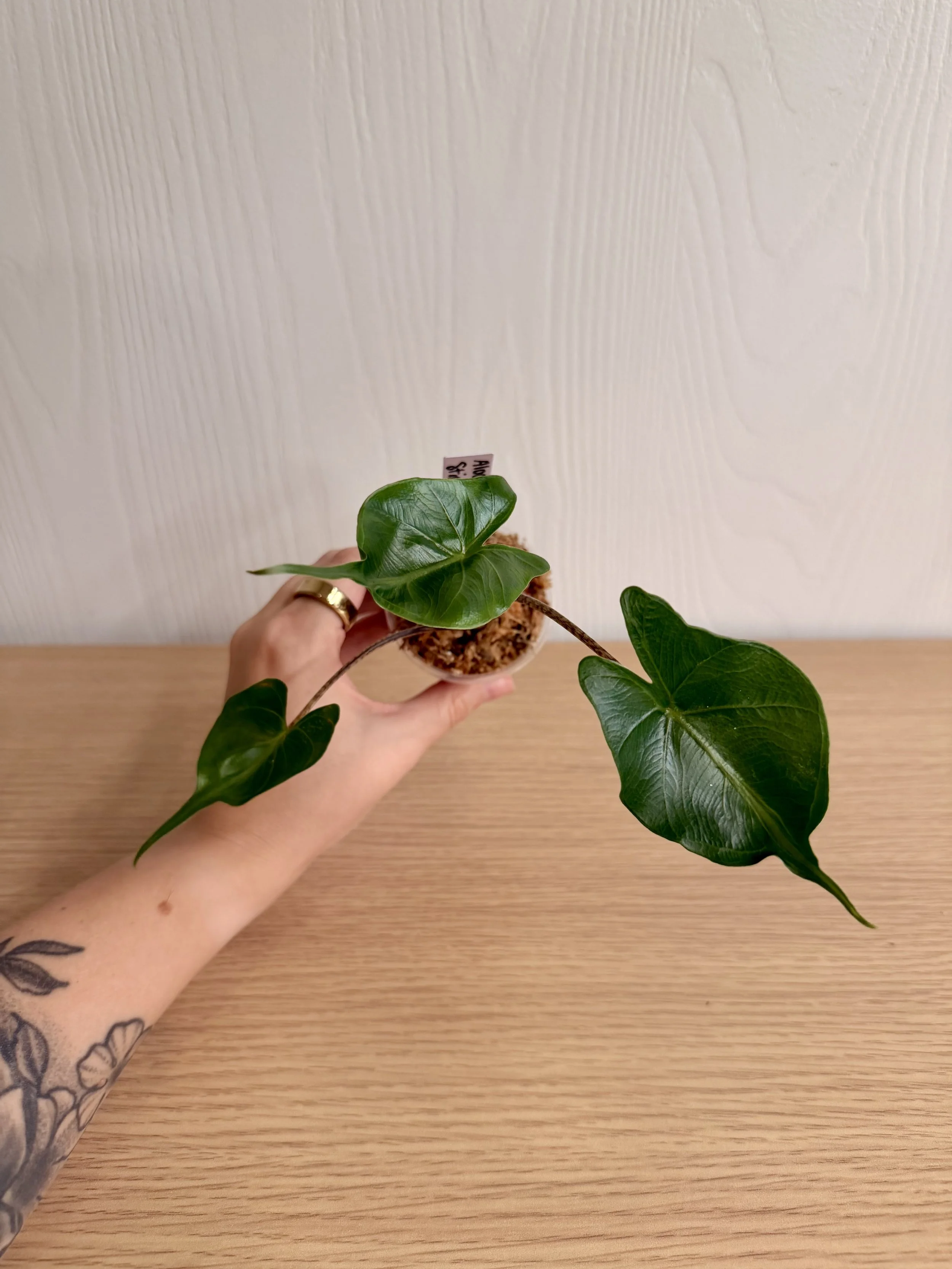
The leaves of the Stingray point upward and outward, which show off its ribbed, leathery, emerald green surface. The whiptail conclusion of its inward-curving edges earns the Stingray its name as this shape resembles the marine animal.
Stingray Care:
Light: Bright, indirect light. Make sure this plant does not get DIRECT light, as the leaves will scorch and wilt.
Water: Consistent watering is key. The Lilly Pad suggests a self-watering pot.
Soil: Right now, this plant is potted in a sphagnum moss/perlite mix. However, The Lilly Pad suggests putting alocasias in a self-watering pot with perlite/fluval stratum. One could pot an alocasia in regular chunky soil, too!
#66
The leaves of the Stingray point upward and outward, which show off its ribbed, leathery, emerald green surface. The whiptail conclusion of its inward-curving edges earns the Stingray its name as this shape resembles the marine animal.
Stingray Care:
Light: Bright, indirect light. Make sure this plant does not get DIRECT light, as the leaves will scorch and wilt.
Water: Consistent watering is key. The Lilly Pad suggests a self-watering pot.
Soil: Right now, this plant is potted in a sphagnum moss/perlite mix. However, The Lilly Pad suggests putting alocasias in a self-watering pot with perlite/fluval stratum. One could pot an alocasia in regular chunky soil, too!
#66